During normal weather conditions an drainage system could appear to be operating well. However, a rainy day can reveal weaknesses in the property’s infrastructure. Parking areas may flood and detention pools can fill up too quickly, roads are dangerous, and areas that are low-lying begin to collect water. In many instances, the issue is not just rain. It is that the site isn’t equipped to efficiently move stormwater gravity alone isn’t enough.
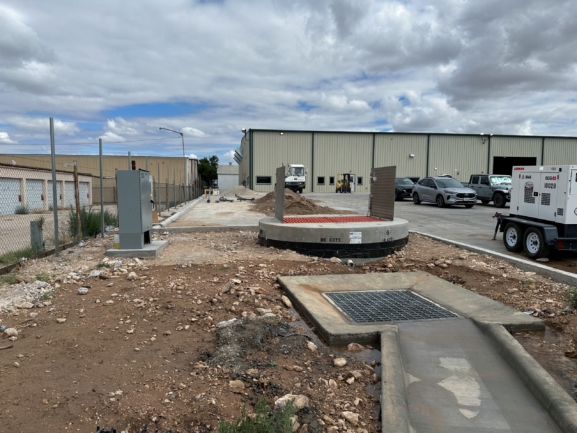
A stormwater lift station becomes essential. These systems are made to capture and move stormwater away from areas where the runoff naturally builds up, protecting buildings, roads as well as outdoor spaces. Whether the project is industrial, commercial, municipal, or residential the lift station could contribute to making the area functional and following an event of storm.
Stormwater management must be designed for the particular site.
Each property is able to deal with runoff in a unique way. A shopping center with a large parking area paved with asphalt will not function like a subdivision for residential purposes however neither will have the same needs as an industrial site or municipal drainage project. Stormwater management systems are developed in accordance with a variety of variables, including the flow rate, elevations at the site, detention requirements and discharge requirements.
Romtec Utilities is not a company that handles stormwater pumping in a standard manner. The design of each system is based on the particular pumping requirements of the particular site. It could be used to reduce flooding, drain a detention pool, manage runoff from a development or support a larger municipal network or support a larger municipal network. The most appropriate solution is dependent on how much water needs to be pumped, the speed at which it needs to move, and the location it has to go.
The station for stormwater is much more than just a pump that is placed in the vault
It requires more than powerful machines to construct an efficient runoff pumping station. It functions as a highly coordinated system, seamlessly blending mechanical, structural components, as well as control to handle large stormwater volumes efficiently and effectively. For the station to perform optimally throughout its lifetime it is crucial to ensure that all components work in harmony. These include exact pump sizing and a strategic wet-well design, advanced controls, durable piping systems, resilient power system with real-time monitoring and durable pipe.
This level of total system integration is exactly why the best stromwater system designers stand out from the competition. An outstanding design doesn’t just solve a drainage problem for a short time; it also requires a longer-term proactive approach. High-end engineering is constantly incorporating the ease of maintenance over time and future demands for the site as well as the maximum operating efficiency. The entire system needs to be designed to endure harsh conditions in the real world and not rely on false assumptions.
The planning process is important, regardless of whether you’re dealing with torrential floodwaters or developing municipal systems subject to high pressures, like booster pumps for water that is clean, and where failure is not an alternative. Romtec Utilities designs its stormwater systems with these facts. They provide a range of pumps specifically designed to meet the needs of different types of applications. The pumps are accompanied by documentation, training and startup help to ensure that the owner can manage their system.
Better planning creates better flood protection
A stormwater pump station well-designed can lower flood risks, improve site accessibility, and safeguard the areas around it from water destruction. It also makes a site more resilient by ensuring that runoff is managed efficiently and swiftly during major storms.
It’s easy for people to ignore stormwater infrastructure until it goes down. But a dependable stormwater lift station is one of the most vital investment a property owner, municipal or developer could make if runoff has to be controlled actively rather than in a passive manner. Stormwater management systems can make a place safer and more effective. They also help it improve its ability to cope with changing weather conditions.